

Curious minds · 5 min read
How to Answer Your Child's Endless "Why?" Questions
A four-year-old can ask hundreds of questions a day. Simple ways to answer, turn questions back into thinking, and keep curiosity alive even when you are tired.
“Why is it raining?” “Because clouds are full of water.” “Why are clouds full of water?” “Because water goes up into the sky.” “Why does it go up?” “Because…” and five minutes later you are explaining evaporation in the car, at a red light, to a four-year-old who is already asking why lights are red.
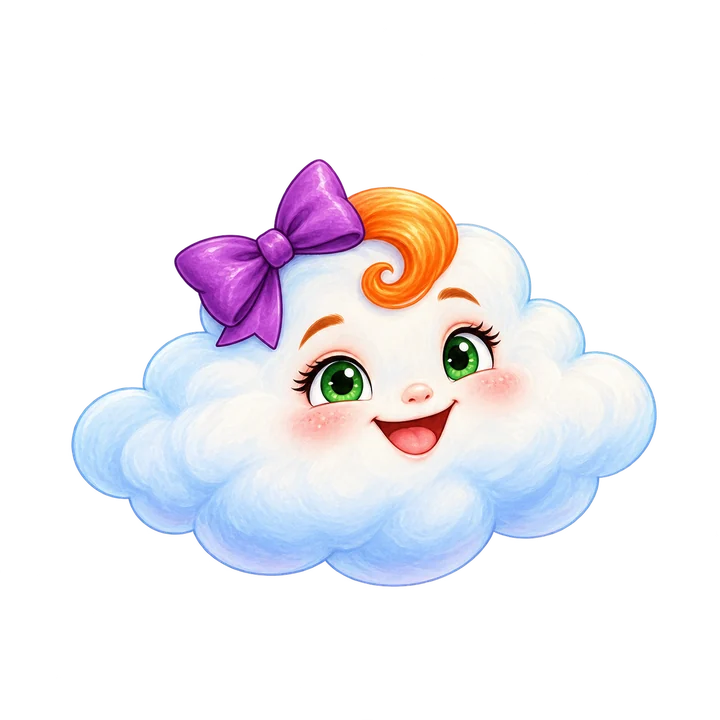
Our heroine is named after that word. Whyia wakes up every morning with a new “Why?” and goes off to find the answer, just like every child. The hundredth question of the day is normal, and there are simple ways to meet it, even when you’re tired.
In one minute
- “Why?” usually arrives around age 3 and peaks between about 3 and 5. Researchers who recorded preschoolers talking with their parents counted dozens of questions an hour. It’s a sign of a healthy, curious brain.
- You don’t need to know every answer. “Let’s find out together” is one of the best answers there is, because it teaches how to find out.
- Turn some questions back: “What do you think?” Thinking out loud teaches more than any fact.
What’s going on
Between about three and six, children discover that things have causes. Asking “why” is how they test it. Sometimes they want information. Sometimes they want connection: a “why” keeps the conversation going with the person they love. And sometimes “why” really means “I don’t want to,” as in “Why do I have to go to bed?”
Telling these apart helps. The first two deserve real attention. The third deserves a calm, short answer and a hug.
There’s another reason the whys keep coming. Studies suggest that after a real explanation, children are more likely to nod or ask something new; after a non-answer (“just because”), they often ask again. So a chain of whys can mean “you haven’t quite answered me yet.”
Young children also learn best with their hands and eyes: a two-minute experiment beats a long explanation, and saying it back in their own words locks it in.
Try today
- Answer short, then ask back. “Clouds are made of tiny drops. When the drops bump together and get too heavy, they fall as rain. Why do you think they get heavy?” Wait a few seconds; young children need time to think. Listen to the theory, even a wild one, then add one more piece.
- Keep a question jar. When you can’t answer right now (driving, cooking, tired), write the question on a slip of paper and drop it in a jar. On the weekend, pick two and find the answers together in a book, online or with an experiment.
- Try one kitchen experiment. A grown-up puts a lid over a pot of hot water for a minute, then lifts it carefully (steam burns). Look at the drops: the warm vapor cooled on the lid and turned back into water. “That’s how clouds make rain.”
What to say
When you don’t know:
“Great question. I don’t know! How could we find out?”
When you’re out of energy:
“That’s a big question, and it deserves a real answer. Let’s put it in the question jar and look it up together on Saturday.”
When “why” means “I don’t want to”:
“You wish you could stay up longer. Bodies need sleep to grow. Pajamas now, and you can ask me one more question in bed.”
What to avoid
- “Because I said so” for real questions. It teaches that asking is annoying.
- Making things up. Children remember. “I’m not sure” is better than a wrong answer they’ll repeat at school.
- Giving the full encyclopedia. One clear sentence is enough for a preschooler. Let them ask the next one.
- Laughing at a theory. “The sun goes to sleep behind the mountain” is a great first idea. Say so, then explore.
When to get help
Endless questions are normal and wonderful. Asking “who, what, where or why” questions is a milestone most children reach by about age 3. If by then your child rarely asks questions, has few words for their age, or seems not to understand simple questions, mention it to your pediatrician, and call sooner if they stop using words they used to say. Early support for language makes a real difference.
If the same worried “why” comes back for weeks (“Will you die?”) and reassurance never seems enough, it may be worry more than curiosity. Your pediatrician or a child psychologist can help.
Read together
A Rainy Adventure starts with Whyia waking up and thinking, “Why is it raining from a cloud?” She turns into a cloud and drifts over forests and mountains, all the way to the beach. Then she meets Lily, a little cloud who cries rain for a city that has been waiting for it. Lily explains: warm, moist air rises into the sky and cools, the moisture forms clouds, and when the clouds get heavy enough, the rain falls back down to Earth. By the end of the day, Whyia grows big enough to make a rain shower of her own. Back home, she tells her mom the whole story, and her mom listens with wide eyes: the best reward for a curious child.
After reading, try the pot lid experiment together, and ask your child to tell the water cycle back to you in their own words. Then start your question jar with the first new “Why?”
Ask after reading “A Rainy Adventure”
- Whyia woke up and wondered why rain falls from clouds. What do you wonder about?
- Lily the cloud explained where rain comes from. Can you explain it back to me?
- If you could turn into anything to find an answer, what would you turn into?
Also helpful: A River Adventure, A Snowflake Adventure, A Long Day